July 28, 2026 · 5 min read
Humidity is the real enemy, not rain
It's not the rain hitting your roof that damages flooring — it's the humidity that sits in a Pacific Northwest home for eight months of the year. Solid hardwood expands and contracts with that moisture swing, which over years shows up as cupping, gapping between boards, or squeaks that weren't there when it was installed.
Why LVP has become the default choice here
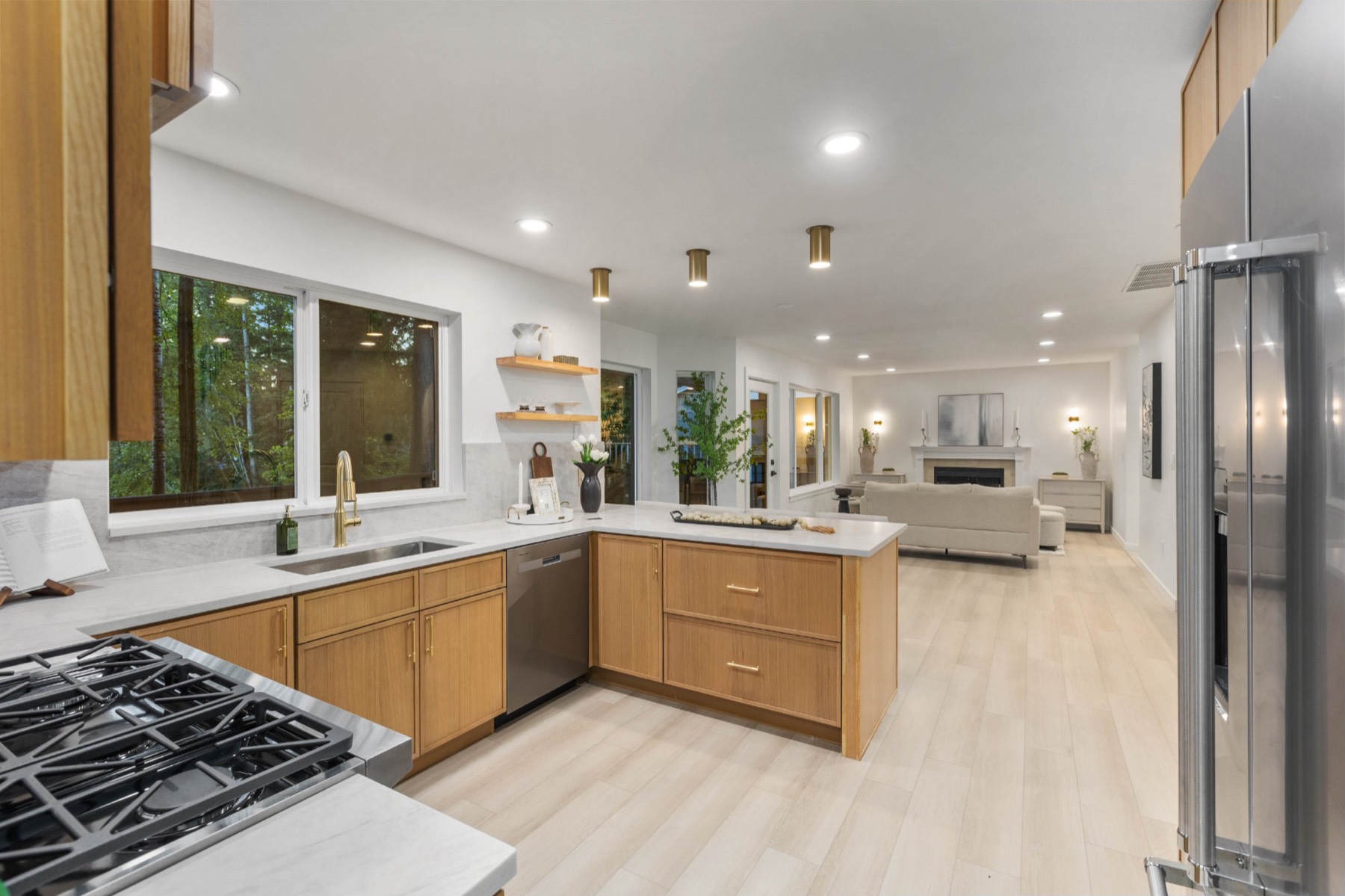
Luxury vinyl plank (LVP) has a waterproof core, so it doesn't react to humidity the way real wood does. It also handles the wet shoes, muddy dogs and dripping umbrellas that come with living here. Modern LVP looks close enough to real wood grain that most guests can't tell from a few feet away, and it costs less installed than solid hardwood.
Where engineered hardwood still makes sense
If you want real wood underfoot — for resale value, for a specific room, or just because you prefer it — engineered hardwood is the better compromise than solid hardwood in this climate. Its plywood core is more dimensionally stable than solid wood, so it handles humidity swings better while still being a genuine wood wear layer you can (lightly) refinish.
What we check before recommending either one
Subfloor flatness, whether the room sits over a crawlspace or slab, and how much direct moisture the room sees (kitchens and entries need different specs than bedrooms) all factor into what we actually recommend — not just what looks best on a sample board.
Related Service
Flooring & Laminate